
First Year Enrollment
Berkeley registration for fall courses typically opens in mid July; UCSF registration typically opens in August. Check your CalCentral and UCSF Student Portal pages for enrollment dates. Berkeley classes tend to fill up pretty quick, so make sure to pick your courses ahead of time. UCSF enrollment is conducted by submitting a Study List of classes you want to take, and course times/locations are usually published a bit later. Note that most students are able to secure spots in UCSF classes.
The most important thing is to register for the required amount of units ASAP to ensure timely payment of academic fees and your first stipend payment. You can easily add and drop courses throughout the beginning of the term. Additionally, don’t worry if your desired Berkeley classes are full. Just register on the waitlist and make sure to show up for the first class sessions, as students are usually able to secure a spot in these classes even if they were full at registration.
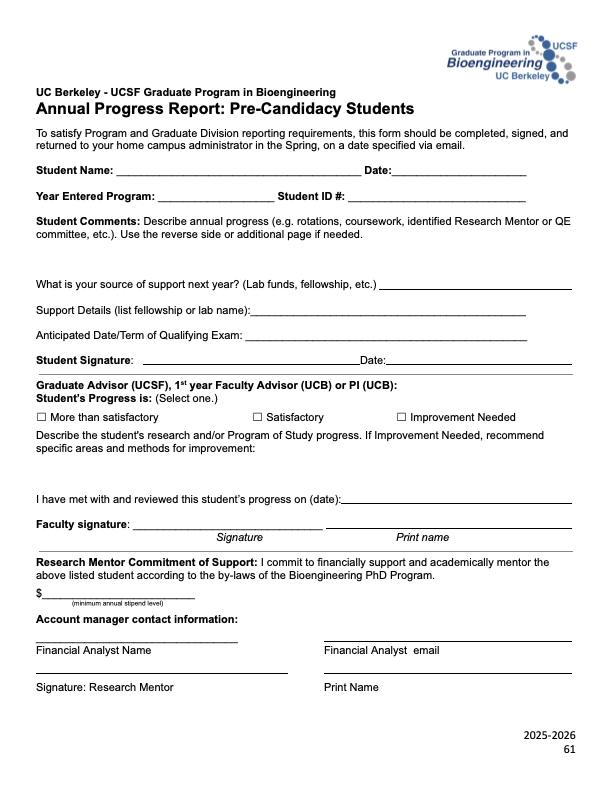
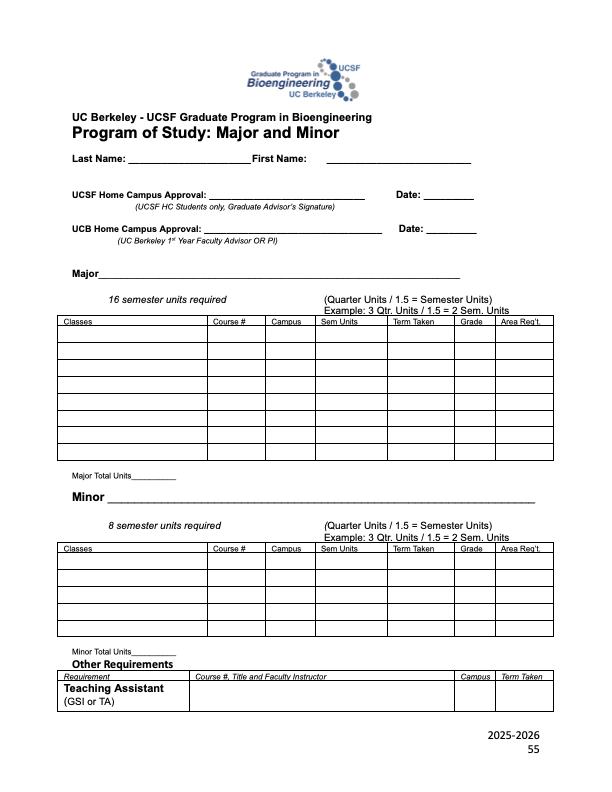
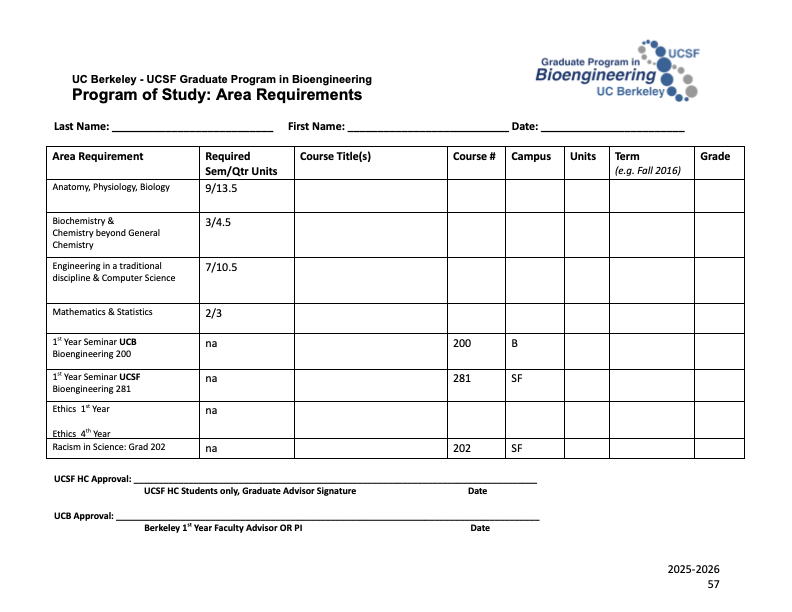
We recommend that you check in with your faculty advisor as soon in the year as possible. They should able to offer guidance on which courses are the best fit for your proposed research area, and can also sign off on your previous coursework for counting towards the Area Requirements. Beast Peer Advisors are also available to help advise on classes that they may know about!
To maintain full-time student status in your first year:
-
For Berkeley-based students, enroll in a minimum of 12 units (academic or research) at Berkeley per semester
- Includes BioE rotation research units with your faculty advisor
-
For UCSF-based students, enroll in 8 research units at UCSF per trimester
- If rotating at Berkeley, UCSF Graduate Advisor provides written grade on behalf of Berkeley faculty rotation host
- UCSF-based students are automatically affiliated with Berkeley via a 1-unit PSEUDO course directly added by the Berkeley Registrar's Office
-
First year students have three (3) required classes:
- BioE 200 (UCB) AND BioE 281 (UCSF): First Year Seminars, lab overviews and rotation opportunities
- BioE 201 (UCB) OR Grad 214 (UCSF): Responsible Conduct of Research in Bioengineering
- Grad 202 (UCSF): Racism in Science
- BioE 301 (UCB): Teaching Techniques for Bioengineering (Optional, but must be taken during/prior to GSI/TA-ing)
- Complete a minimum of 12 semester or 18 quarter credits counting towards your major in the first year
You can find classes past students have taken to fulfill their area requirements, major and minor, as well as more registration tips under Course Information.
Research Rotations
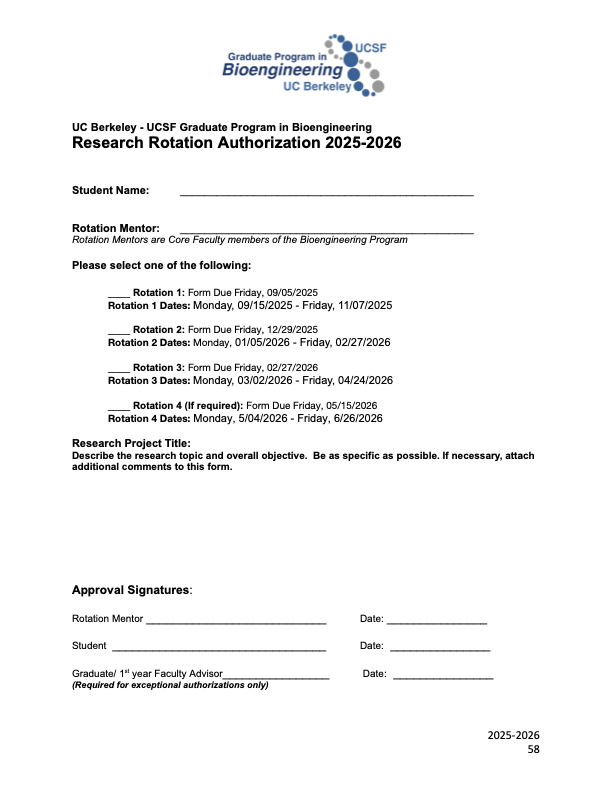
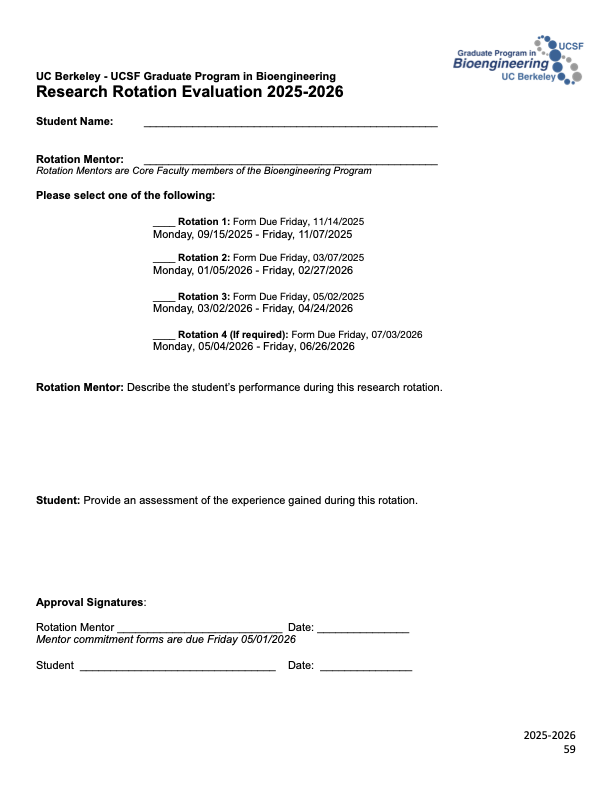
First year students will have the opportunity to do three rotations with core Bioengineering faculty. During your rotations, it's often advised that lab work should be prioritized over coursework, so that you can get the best sense of the lab and whether it would be a good fit.
Rotation arrangements and matching occurs throughout the whole year, even starting as early as July and August. Look out for emails from the program managers, which can give you a good timeline for when you should start reaching out to potential PIs. It's important to note that this rotation-matching process is primarily driven by the student, so make sure to be proactive about sending emails and setting up meeting times. Don't be discouraged if some PIs don't respond immediately. It's likely that your email was just lost among the countless emails that professors receive daily. Just send follow-up messages regularly. If possible, try to email professors with your corresponding @berkeley.edu or @ucsf.edu email address; some professors have spam filters set up to weed out anything from outside their home organization.
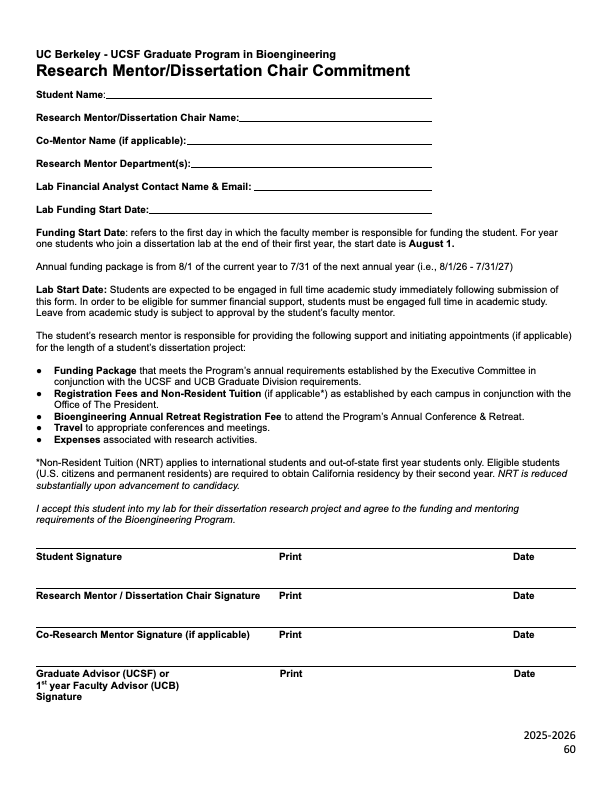
In your first meeting with potential mentors, ask about the lab's funding availability. This can be phrased in questions such as "How many students do you intend on taking this year?" paired with "How many other students are planning to rotate?" Although professors really shouldn't be taking on rotation students they won't be able to fund, it's still important that you make sure your time isn't being wasted.
To get more advice on how to navigate rotations, reach out to the Beast peer advisors, your first year faculty advisor and UCSF's Career and Professional Development!